
 Knowledge CenterArticlesClosing the Gap Between Women’s Health … Closing the Gap Between…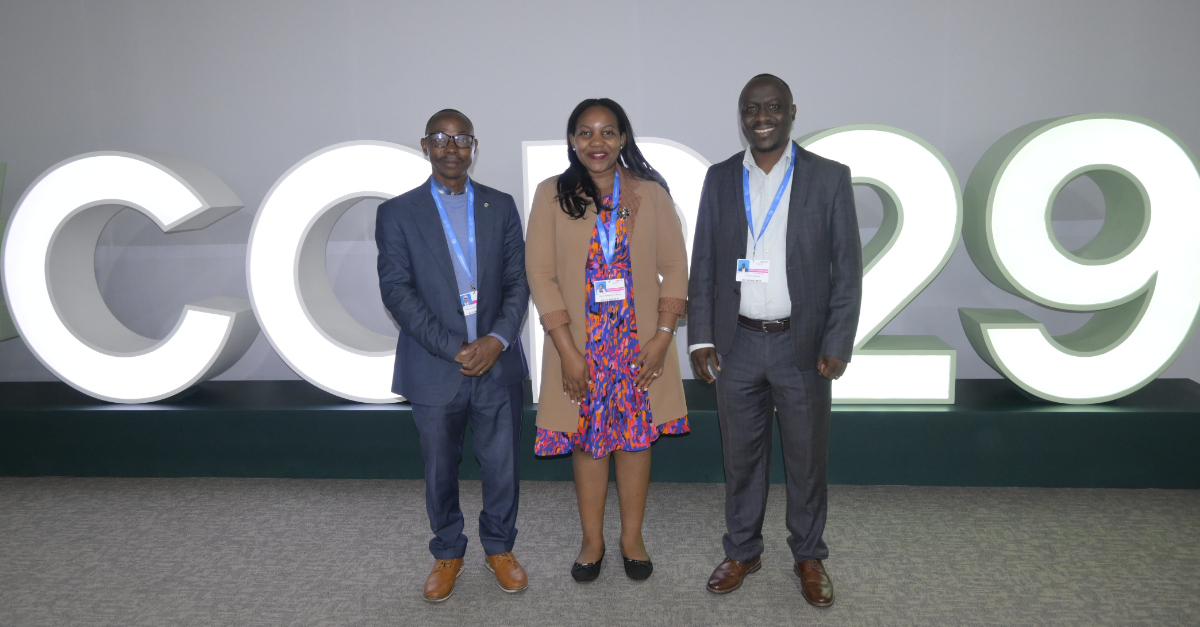
Dr. Didacus B. Namanya (Ministry of Health), Niona Nakuya (Regenerate Africa), and Charles Kabiswa (Regenerate Africa) at COP29 in Baku, Azerbaijan | Photo provided by Regenerate Africa
Charles Kabiswa has been attending the annual United Nations Framework Convention on Climate Change (UNFCC) Conference of the Parties (COP) to participate in climate negotiations since 2017.
The Ugandan advocate and founder of Regenerate Africa would arrive at the world's most important climate stage, not as a climate scientist or government delegate, but as someone who had seen firsthand how climate change was disrupting women’s access to health care and livelihood in his community.
He had spent years working directly with communities and government institutions in Uganda, building the evidence base—from peer-reviewed research to regional research and policy briefs—that made the case for treating women's health as core to climate adaptation, not an afterthought. He wanted the decision makers leading global climate agreements to understand this, too. For years, Charles was one of the few voices in these rooms making the connection between climate change, environmental conservation, and reproductive health, including family planning.
Frontline communities have long understood that climate change and women's health are inseparable: extreme weather disrupts access to contraception and maternal care; disasters and displacement drive gender-based violence. But the global forums where climate funding and policies are decided had not yet recognized women's health as a climate issue. Just 4% of climate-related development assistance prioritizes gender equality, and less than 1% of global philanthropic funding addresses gender and environment together.
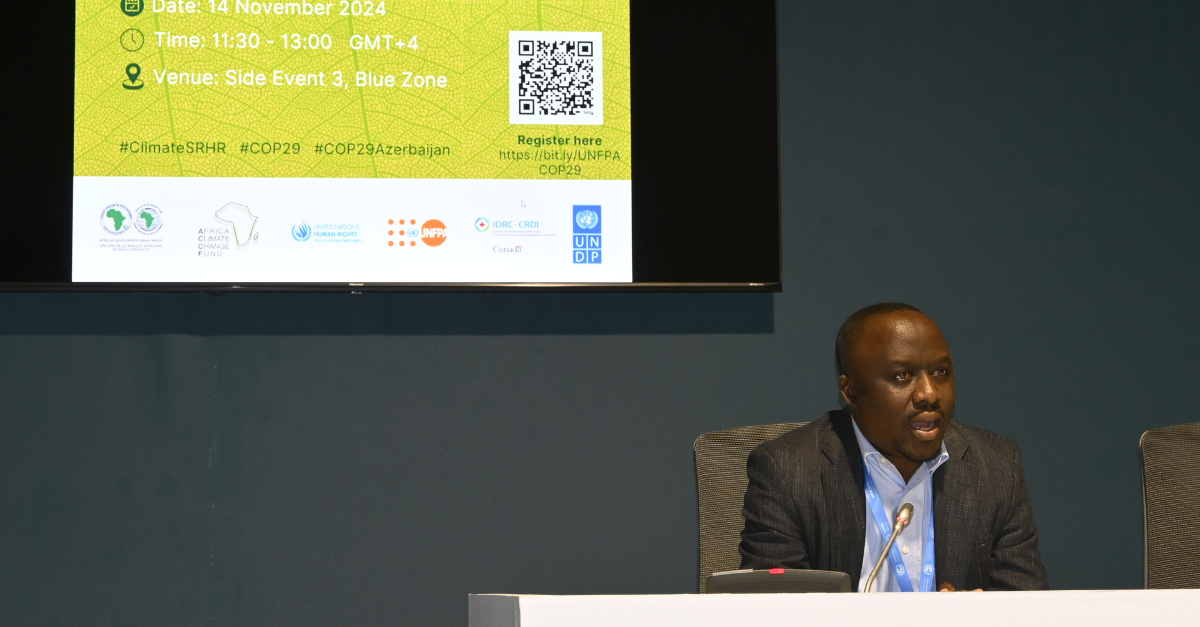
Charles Kabiswa on a panel during COP29 in Baku, Azerbaijan | Photo provided by Regenerate Africa
That is the gap the Resilience Fund for Climate and Women's Health at Panorama Global, supported by The William and Flora Hewlett Foundation, The David and Lucile Packard Foundation, and several individual funders, was built to address. We launched the Resilience Fund to resource the organizations already working at the intersection of climate and sexual and reproductive health and rights (SRHR) so that they could build effective solutions and contribute to sustainable local policy and financing frameworks.
When the Resilience Fund began supporting Regenerate Africa in 2023, what Charles needed was the support to translate years of expertise and work to ensure government policies and funding reflected the realities on the ground. With dedicated resources, Regenerate Africa forged partnerships across government ministries and civil society coalitions—nurturing a network of champions for integrated climate and health policy—and began making meaningful progress on the policies Charles had long been working toward.
That progress rests on a strategic evidence-generation strategy that includes peer-reviewed publications; technical factsheets on the links between climate change, reproductive health, and gender; regional policy briefs and analyses; and submission to the UNFCCC on integrating health, including reproductive health, in the Global Goal on Adaptation. Regenerate Africa has carried this growing body of evidence directly into the rooms where policy is determined.
The results show what sustained advocacy makes possible with funding support. In 2024, Uganda published its Health National Adaptation Plan (HNAP), the government framework that guides how the national health system prepares for climate impacts, with sexual and reproductive health and gender equity included as core components. That outcome was not inevitable. It required years of advocacy, stakeholder engagement, and sustained presence in policy spaces by Charles and his team, working closely with other NGO partners and government allies.
Regenerate Africa has since been appointed to lead health and climate working groups at the Ministry of Health and national civil society level, and their work focuses on tracking implementation of commitments laid out in the HNAP. With this expertise, their leadership has extended beyond Uganda's borders, training the Reproductive Health Advocacy Partnership in Malawi and Zambia on the climate-SRHR nexus.
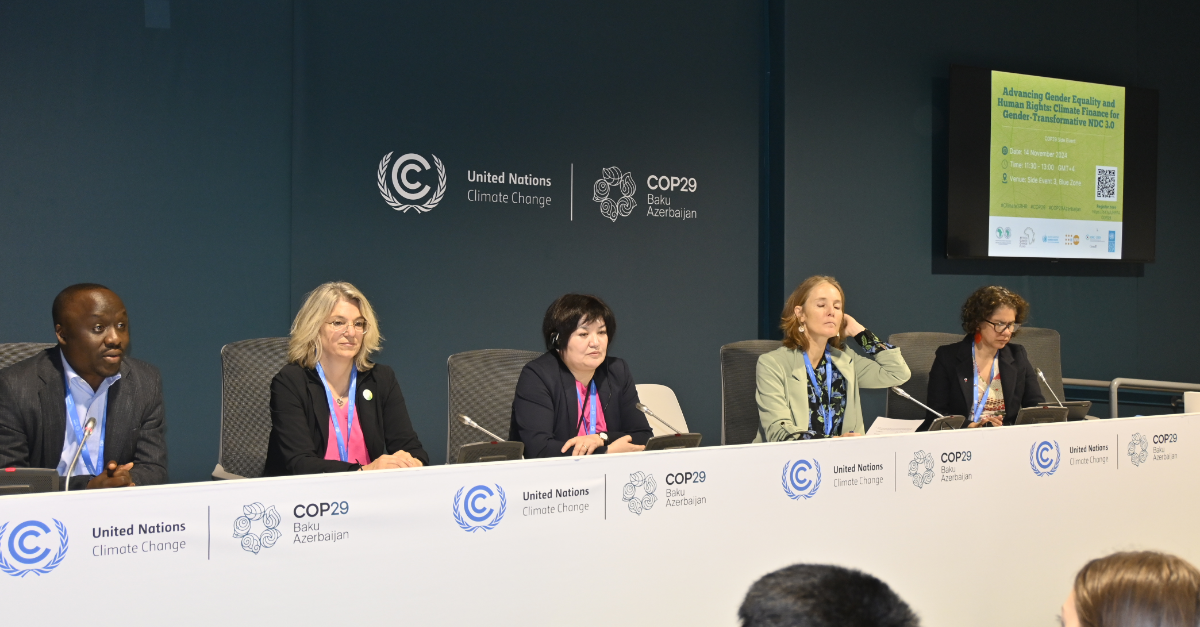
Panelists speaking at a climate and gender side event during COP29 in Baku, Azerbaijan | Photo provided by Regenerate Africa
What Regenerate Africa's experience shows is that understanding the needs of community leaders, trusting their leadership, and backing them early and consistently is what moves this field forward. Across the Global South, organizations are doing this work with deep knowledge of the climate-SRHR intersection but with limited support. The Resilience Fund exists to change that. Currently the Fund supports more than a dozen such organizations, and this year is continuing partnership with four partners: Regenerate Africa, Her Dream Initiative Tanzania, Climate Action Network (CAN) Tanzania, and Pathways Policy Institute (PPI).
Each of these grantee partners will continue their critical work with the Resilience Fund’s support. Regenerate Africa will focus on advancing the integration of health, reproductive health, and gender considerations into regional climate policies—building on a track record that includes securing a dedicated health section in Civil Society and Government COP position papers and advocating for reproductive health and gender integration into Uganda's updated Nationally Determined Contributions.
Her Dream Initiative Tanzania works to reduce the reproductive health vulnerability of adolescent girls and women to climate-related shocks through community education, preparedness, and advocacy, while Climate Action Network Tanzania advocates to embed national policy commitments on reproductive health into district-level climate adaptation and disaster preparedness plans and budgets, and Pathways Policy Institute focuses on integrating SRHR into county planning, budgeting, and disaster preparedness frameworks.
For years, organizations like these have been building community knowledge and policy expertise, adapting in real time and often with limited support. This work is slowly gaining the recognition it deserves, though resources continue to be a challenge amid shifting global priorities.
The window to shape how climate policies treat women's health is open, and the organizations that understand this intersection best are already leading in their communities and shaping national and local policies, as Regenerate Africa has. What’s needed now are funders willing to recognize that leadership and resource it.
When frontline leaders get support, the policies, financing, and health outcomes follow for women, girls, and the most vulnerable communities around the world.
Join us to build a climate-resilient future.
 Your Vision
 Our Platform
 Real impact
Panorama Global is a member of The Panorama Group.
Privacy Policy © 2026 Panorama Global. All rights reserved.
 Contact Us
 Search
 Join Our Mailing List