
 Knowledge CenterArticlesMoving from Friction to Firmer Ground: … Moving from Friction to…
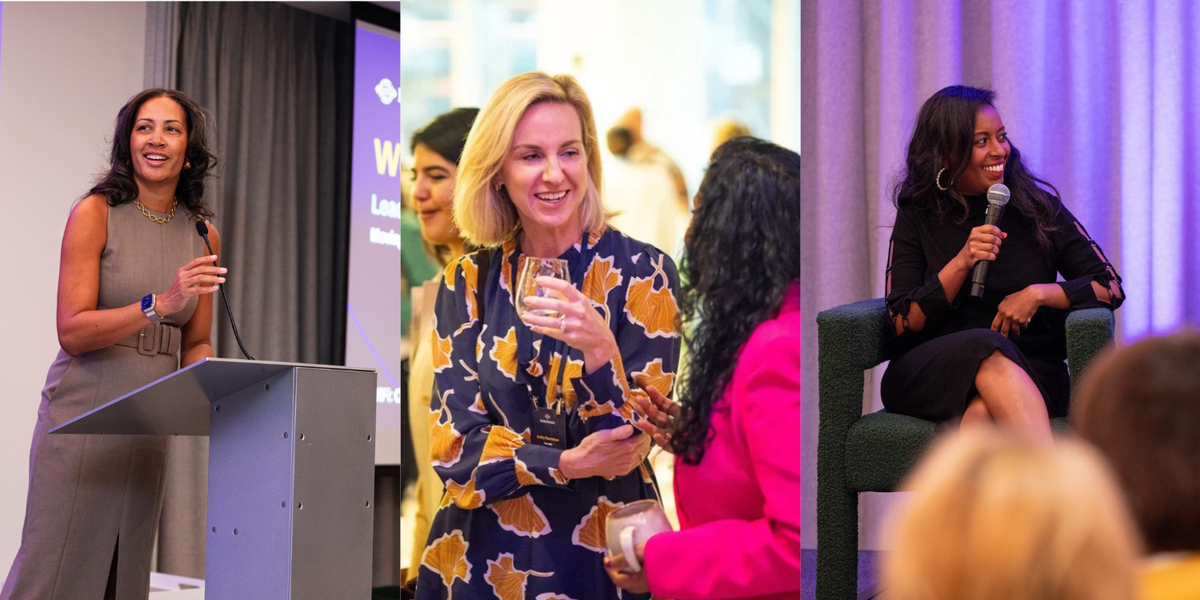
Each September, the United Nations General Assembly (UNGA) and Climate Week NYC bring together thousands of leaders and advocates from across government, civil society, philanthropy, and the private sector to discuss the most pressing global issues.
Before the 81st UNGA week officially kicked off, Panorama convened 200 of those same leaders for our third annual Leadership Forum. This year’s theme, Moving from Friction to Firmer Ground, invited attendees to explore what it takes to move resources, shape public will, and strengthen the civic and moral infrastructure needed for durable social progress when institutions are unstable and trust is eroding.
“We started the Forum on a simple premise," said Panorama Founder and CEO Gabrielle Fitzgerald in her opening remarks. "That people working on different issues, from diverse vantage points, have much to learn from each other." The challenges don't divide cleanly by sector or geography, and neither do the solutions.
That premise shaped the entire afternoon.
Watch a recap of this year's Leadership Forum
The opening session invited attendees to consider the terrain: the demographic, political, and institutional shifts reshaping the conditions for social change.
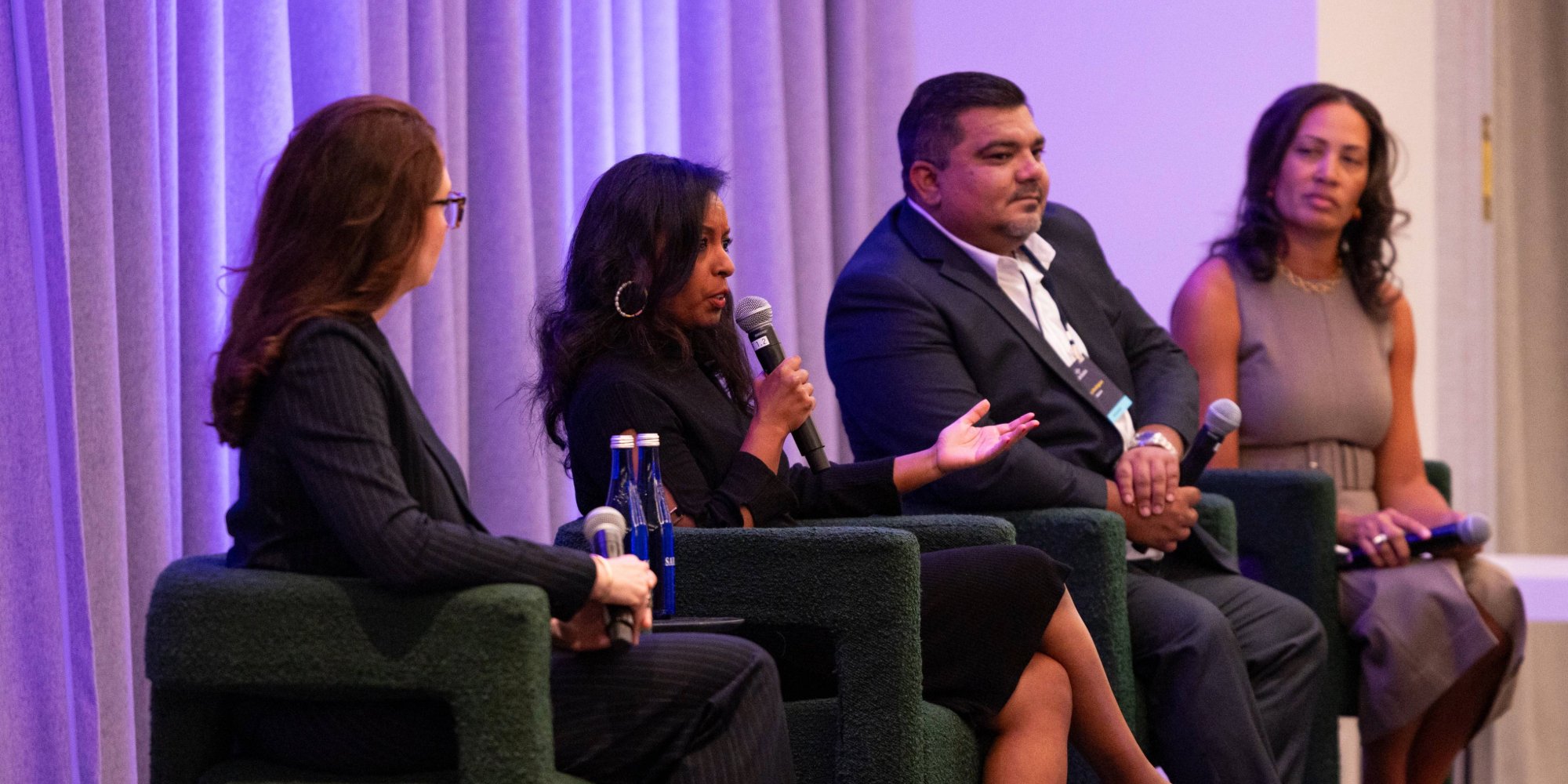
Jennifer Sciubba, Yordanos Eyoel, and Gerry Rodriguez in Q&A with Panorama Strategy's Melanie LeGrande
Jennifer Sciubba, CEO of the Population Reference Bureau, set the stage. “Demographics are colliding with institutions built for a different moment," she said. "They were designed around systems that no longer hold true.” With data backing her bold insight, Sciubba showed that when policy can't keep pace, fear often fills the gap.
The fix, she argued, starts with keeping real evidence in front of people, so clarity, not fear, shapes the response.
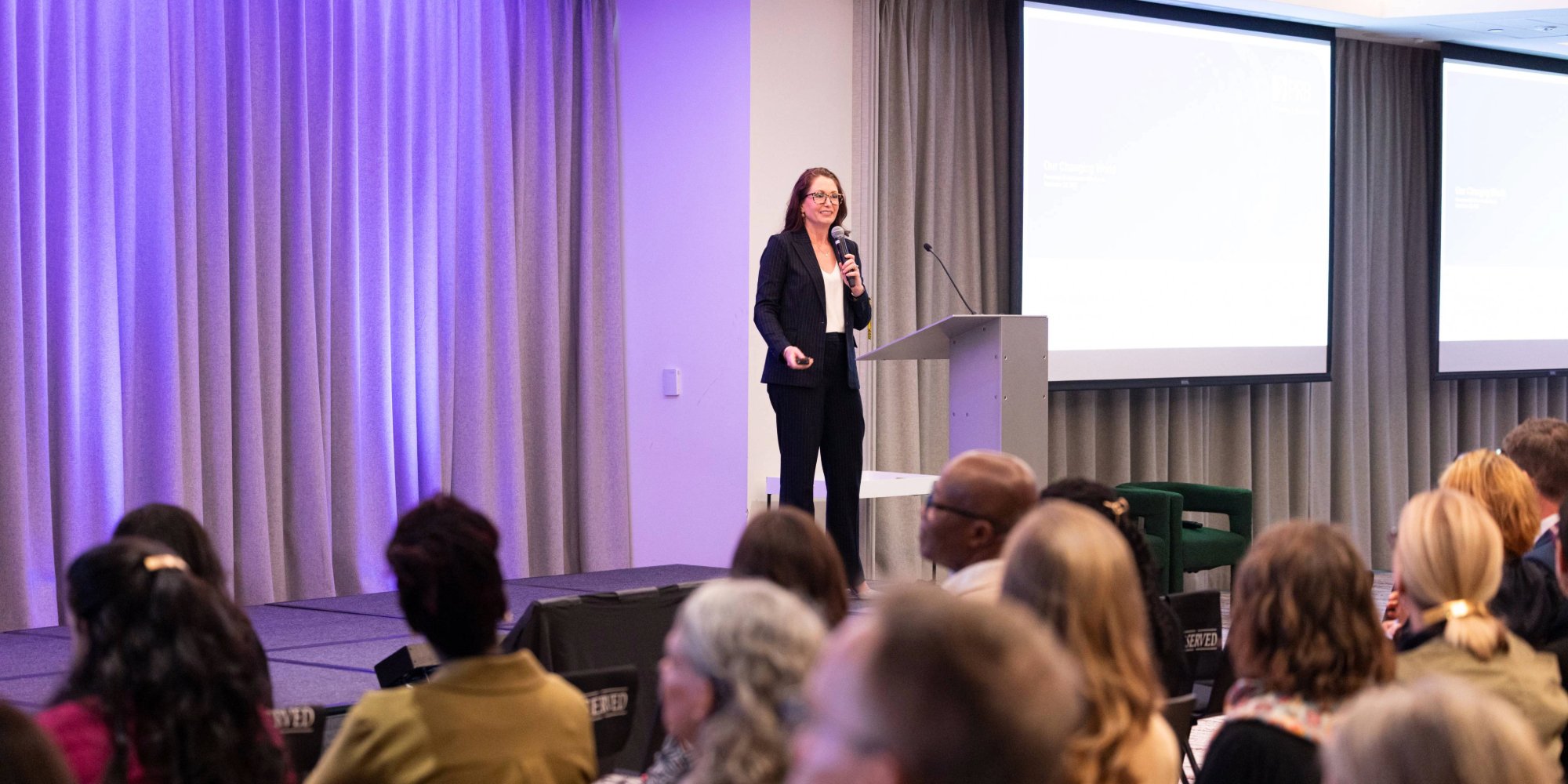
Jennifer Sciubba, CEO, Population Reference Bureau
Yordanos Eyoel, Founder and CEO of Keseb, shifted the conversation from population to power, explaining how authoritarian leaders exploit the economic anxiety and demographic pressures Sciubba described—not through coups, but through elections. With autocracies now outnumbering democracies worldwide, Eyoel challenged the audience to recognize that defending democracy cannot remain siloed from work in health, education, or economic development. The same fears driving demographic backlash are also fueling democratic backsliding.
“What is the opportunity for us to work together to defend what's working, to reimagine more inclusive democracies?” she posed.
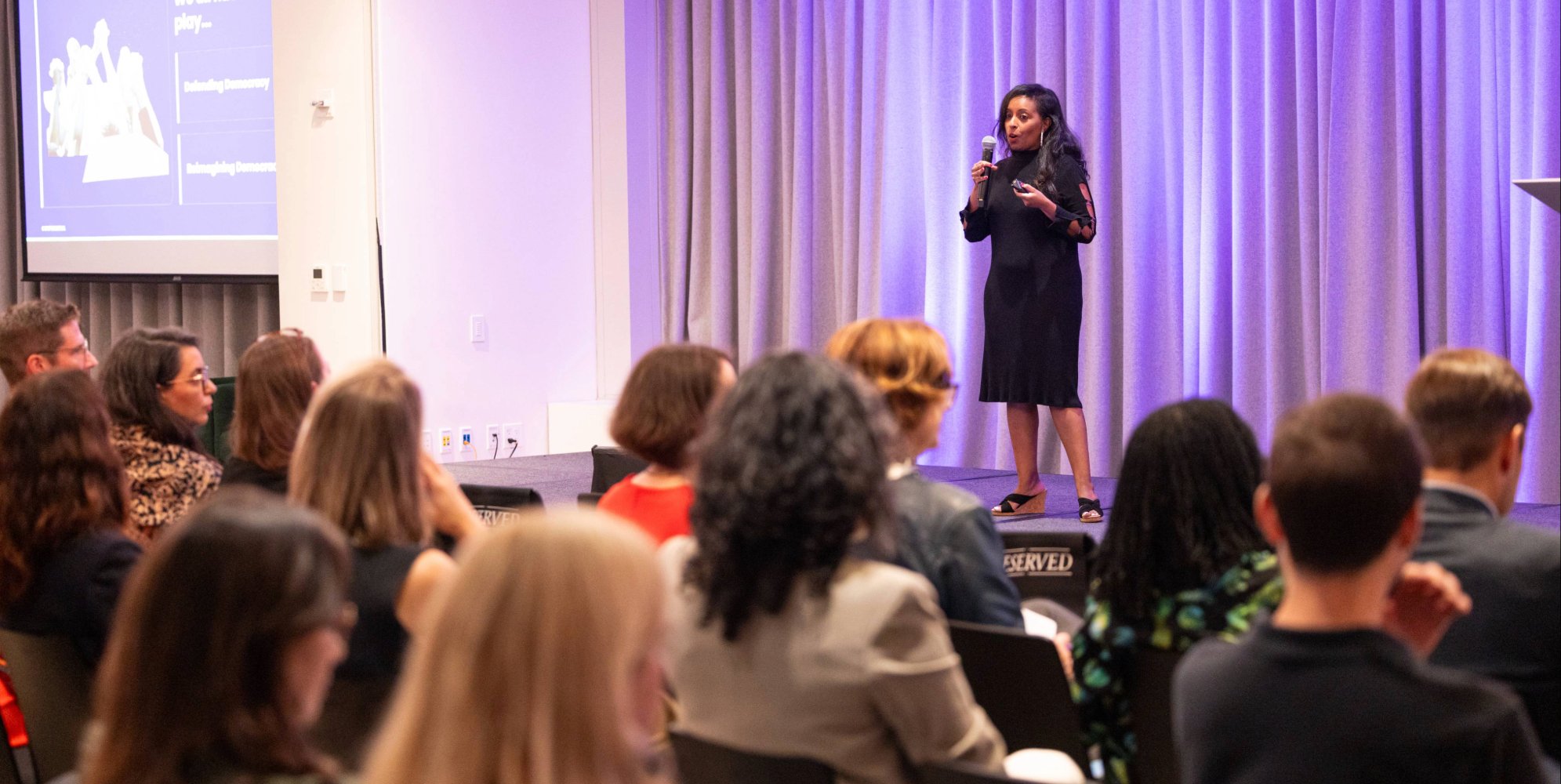
Yordanos Eyoel, Founder & CEO, Keseb
Gerry Rodriguez U.S. Head of Impact at Edelman, closed the session by turning from power to trust. He shared new findings from Edelman's 2026 Trust Barometer. Trust, he said, isn't disappearing. It's relocating.
“What we're seeing now is a retreat into insularity, a reluctance to trust anyone who's different from you.”
According to Edelman's research, seven in ten respondents expressed a reluctance to trust people they view as different from themselves, while trust in those closest to them—neighbors, family, friends, and employers—continues to rise. For organizations built on institutional credibility, this raises a critical question:If trust is increasingly built person to person, how do institutions earn it?
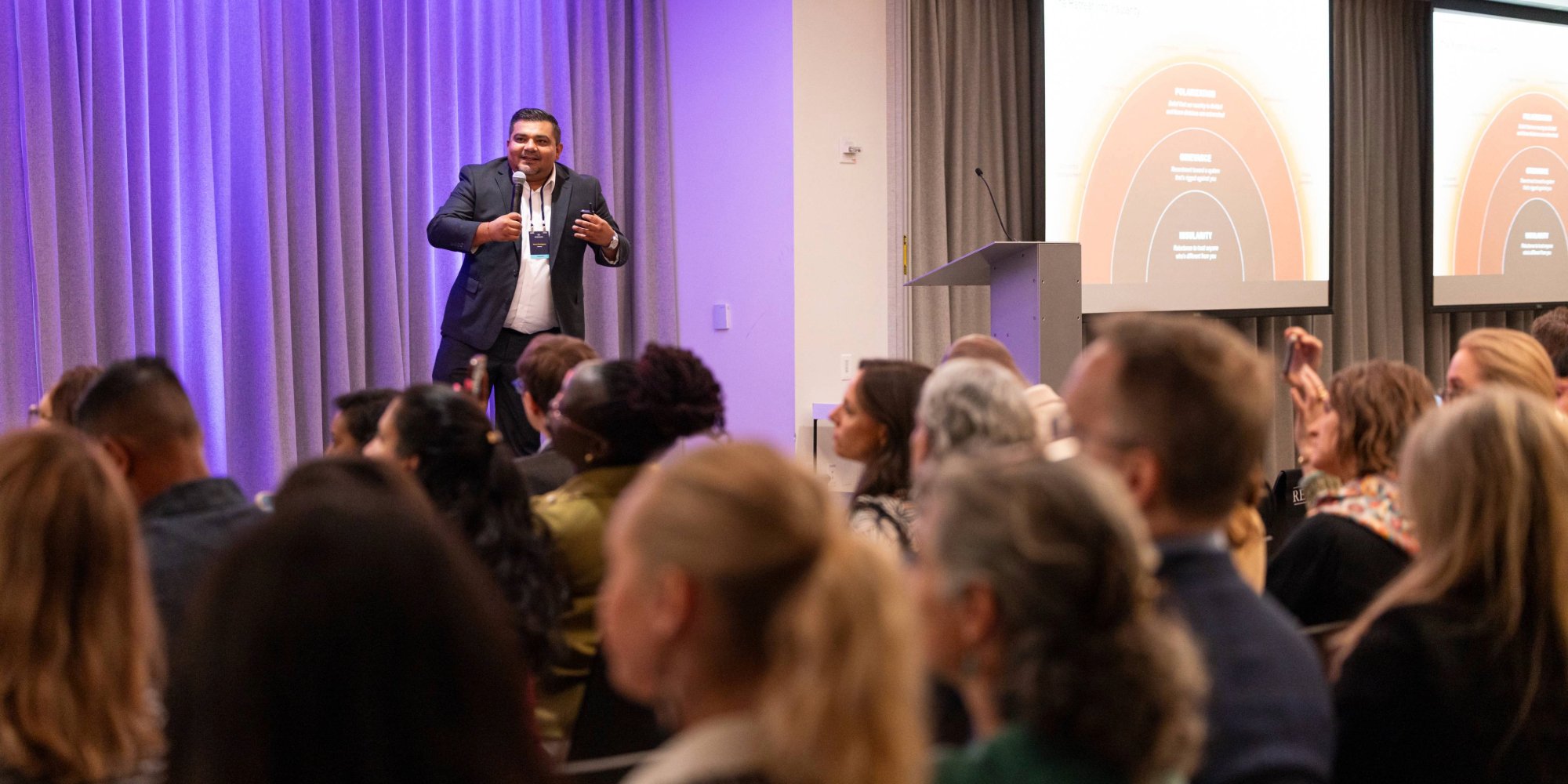
Gerry Rodriguez, U.S. Head of Impact, Edelman
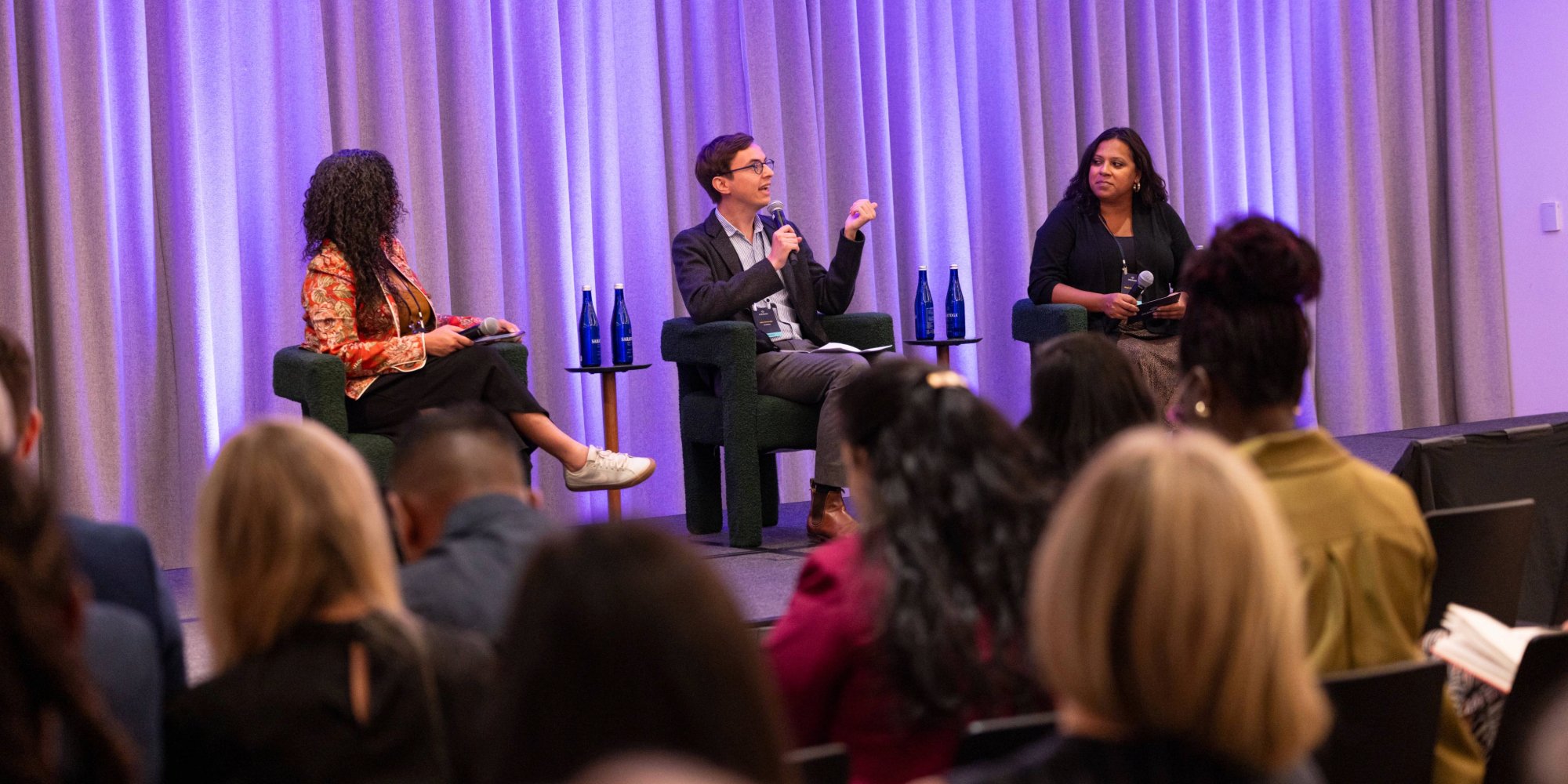
Panelists Sofia Marcia and Jake Alexander in conversation facilitated by Mitali Chakraborty
From context setting, the day moved to decision-making. Moderator Mitali Chakraborty of P150 brought together Jake Alexander, who advises funders navigating politically hostile environments at JA Advisory, and Sofia Marcia, Co-Executive Director of the Urgent Action Fund for Latin America and the Caribbean, an organization built to move money in hours, not months, when someone's safety is on the line.
Their conversation centered on a premise every funder in the room has faced in some form: there is rarely a single right answer when politics, power, and risk are all shifting at once. The takeaway wasn't a clean formula, but a sharper instinct for weighing those factors case by case, and recognizing that caution carries its own consequences.
The third session, a series of lightning talks, made a simple but pointed claim: capital doesn't have to move the way it always has. Through three distinct perspectives, speakers explored how philanthropy can move capital differently—and how the tools to do so already exist.
Dr. Christoph Benn, Executive Director, Center for Global Health and Diplomacy, opened with a shift in who's stepping up to fund global challenges. International funding once centered almost entirely on a small group of wealthy nations. That's changing, he argued, driven by a diversifying donor base, national pride, and the gap left by dismantled legacy funding structures. He pointed to early signs of what that looks like in practice: Uruguay is positioning itself as an innovation hub, while Indonesia is stepping into the responsibilities of an upper-middle-income economy.
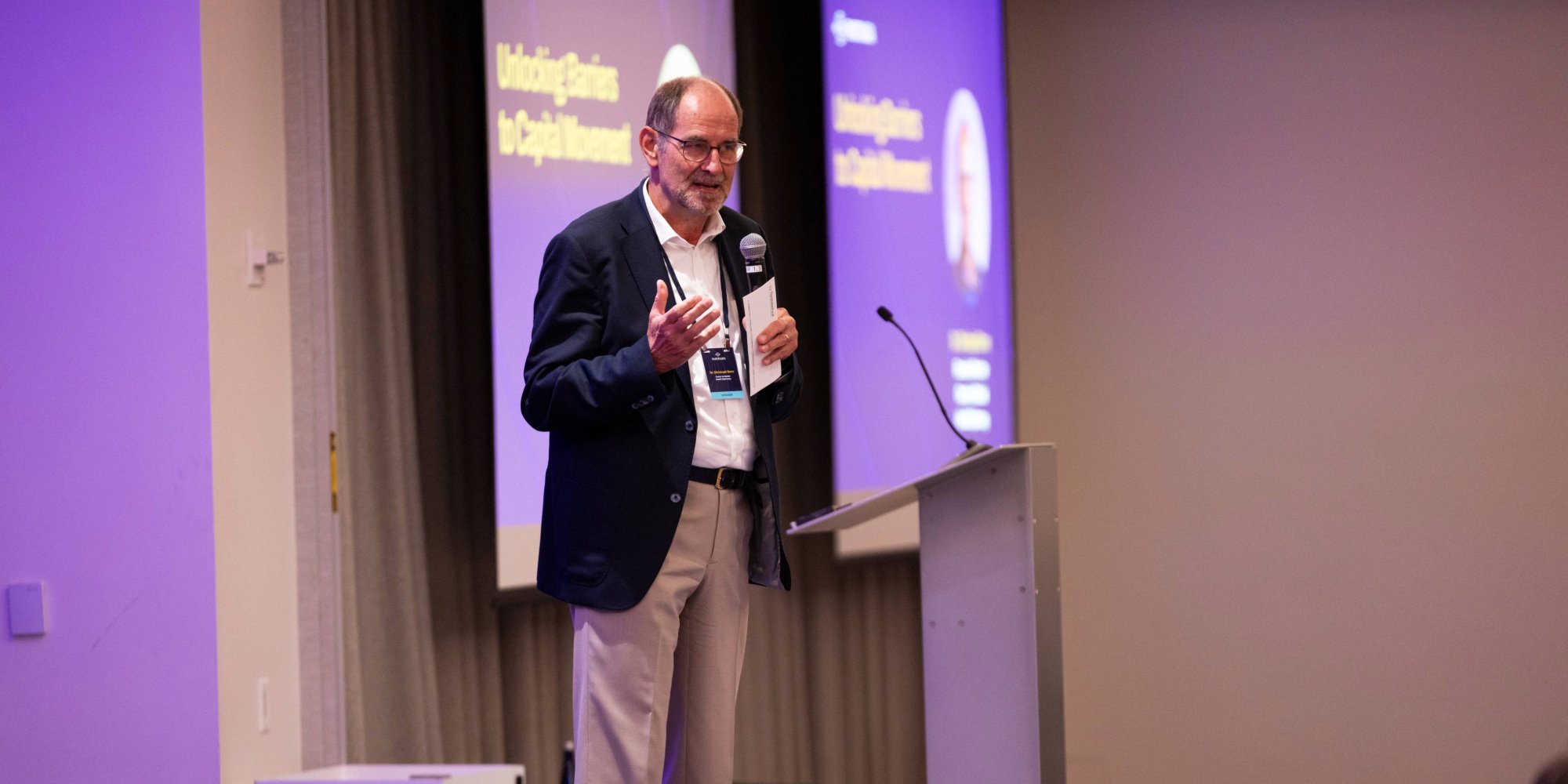
Dr. Christoph Benn, Executive Director, Center for Global Health and Diplomacy
Mercina Tillemann-Perez, VP of Global Impact at Circle, turned from who funds to how money moves. "For most of history, moving aid meant moving physical cash," she said, "slow, leaky, hardest on the people who could least afford the loss." Now, a dollar can travel instantly, arrive in full, and carry its own instructions, reaching exactly the person and purpose it was meant for. Her point wasn't that the technology is new; it's what it makes possible: “Verifiable, programmable money is how we deliver trust when institutions can't be taken on faith.”
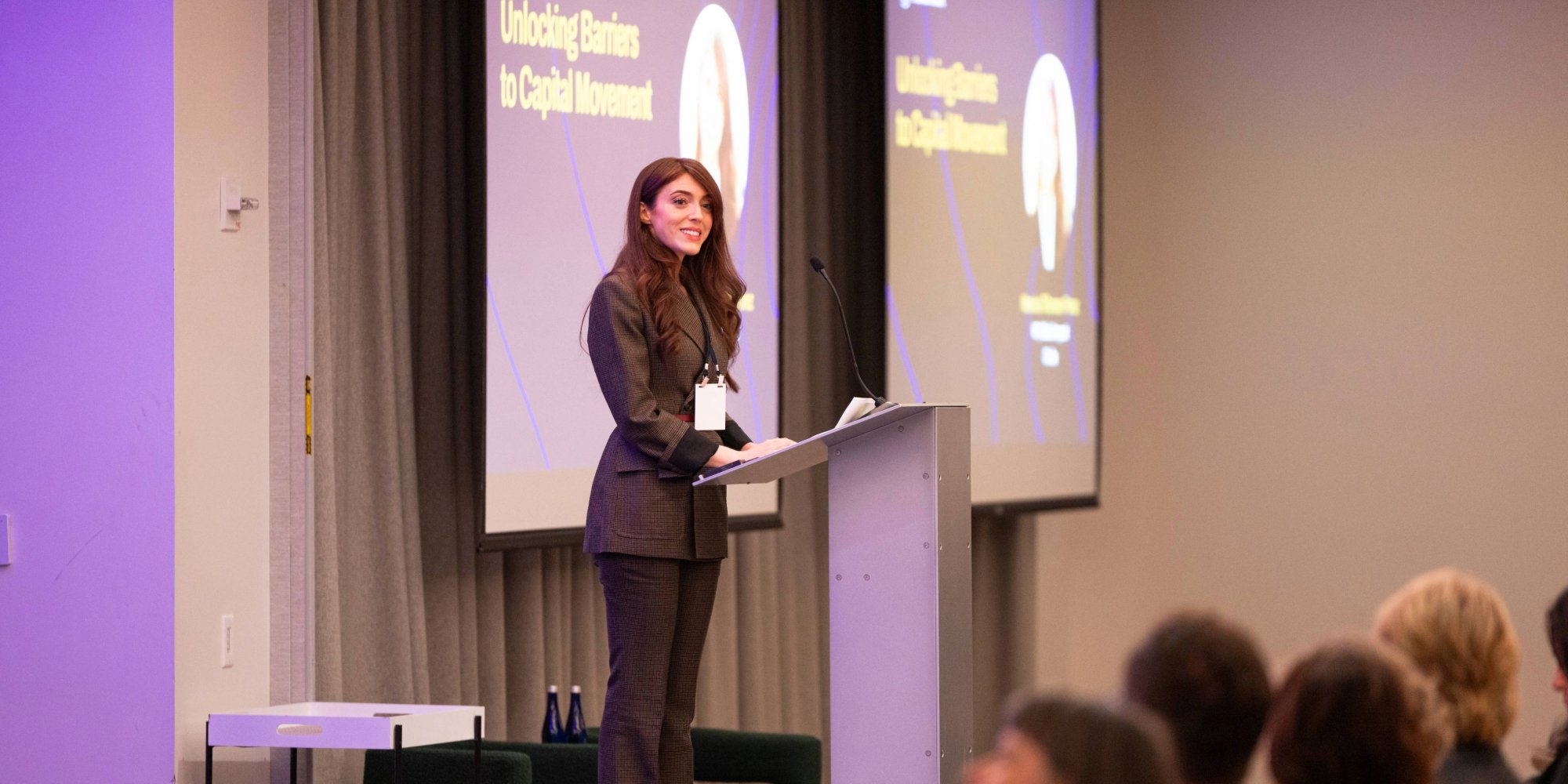
Mercina Tillemann-Perez, VP of Global Impact, Circle
Allison Fine, President and CEO of Every.org, pointed to a structural gap in how philanthropic capital moves: 97 percent of global wealth is held in non-cash assets, yet only 14 percent of nonprofits are equipped to accept them. The problem, she argued, isn't a lack of generosity but outdated infrastructure, built around assumptions that no longer reflect how wealth is held.
“Friction is the kryptonite of generosity,” she said, a phrase that stayed with the room. Every.org moved $80 million last year by removing that friction directly, evidence that closing the gap is less about willingness than about building the systems to make giving possible.
Across all three talks, a pattern emerged: constraints long treated as permanent—who funds, how fast money moves, what kind of wealth counts—are in fact shifting and evolving alongside the landscape.
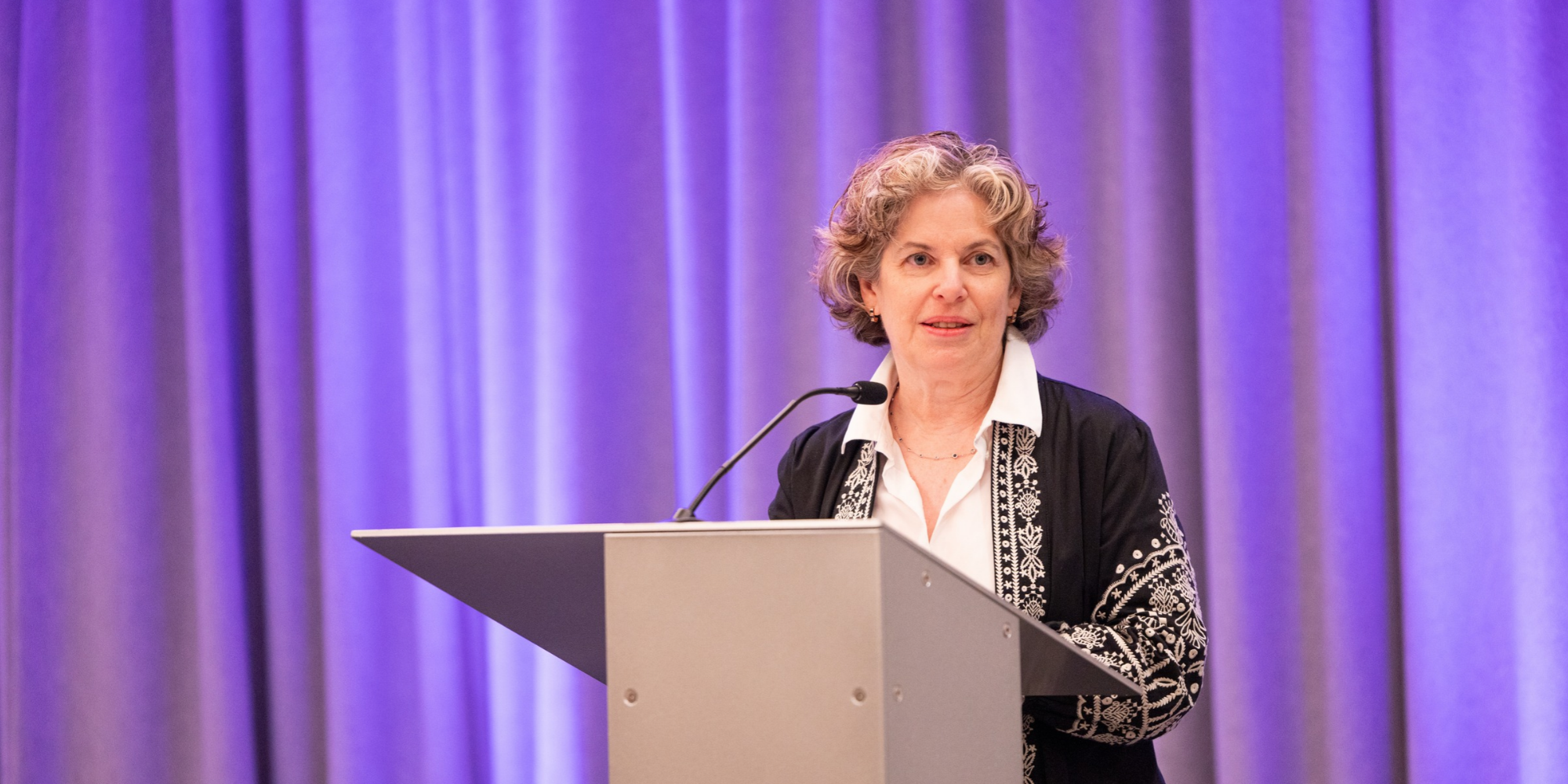
Allison Fine, President & CEO, Every.org
The Forum’s closing panel, moderated by Chitra Hanstad, Global Ambassador for Landesa, which helps secure legal land rights for women worldwide, focused on a different kind of infrastructure: the stories that shape belonging, public will, and what people believe is possible.
Watch the conversation with Reshma Saujani, Julia Quinn, and Emily Ramshaw, moderated by Chitra Hanstad
Novelist Julia Quinn described her advocacy for Landesa's work in a line that stayed with the room: the goal isn't just for a woman to fish. It's for her to own the pond, a reframing of independence as ownership rather than access. She pointed to a different kind of storytelling power in her own fiction. Bridgerton is set two centuries ago, yet audiences recognize themselves instantly in its characters' constrained choices. Emotional truth travels across time, she said, even when circumstances don't.
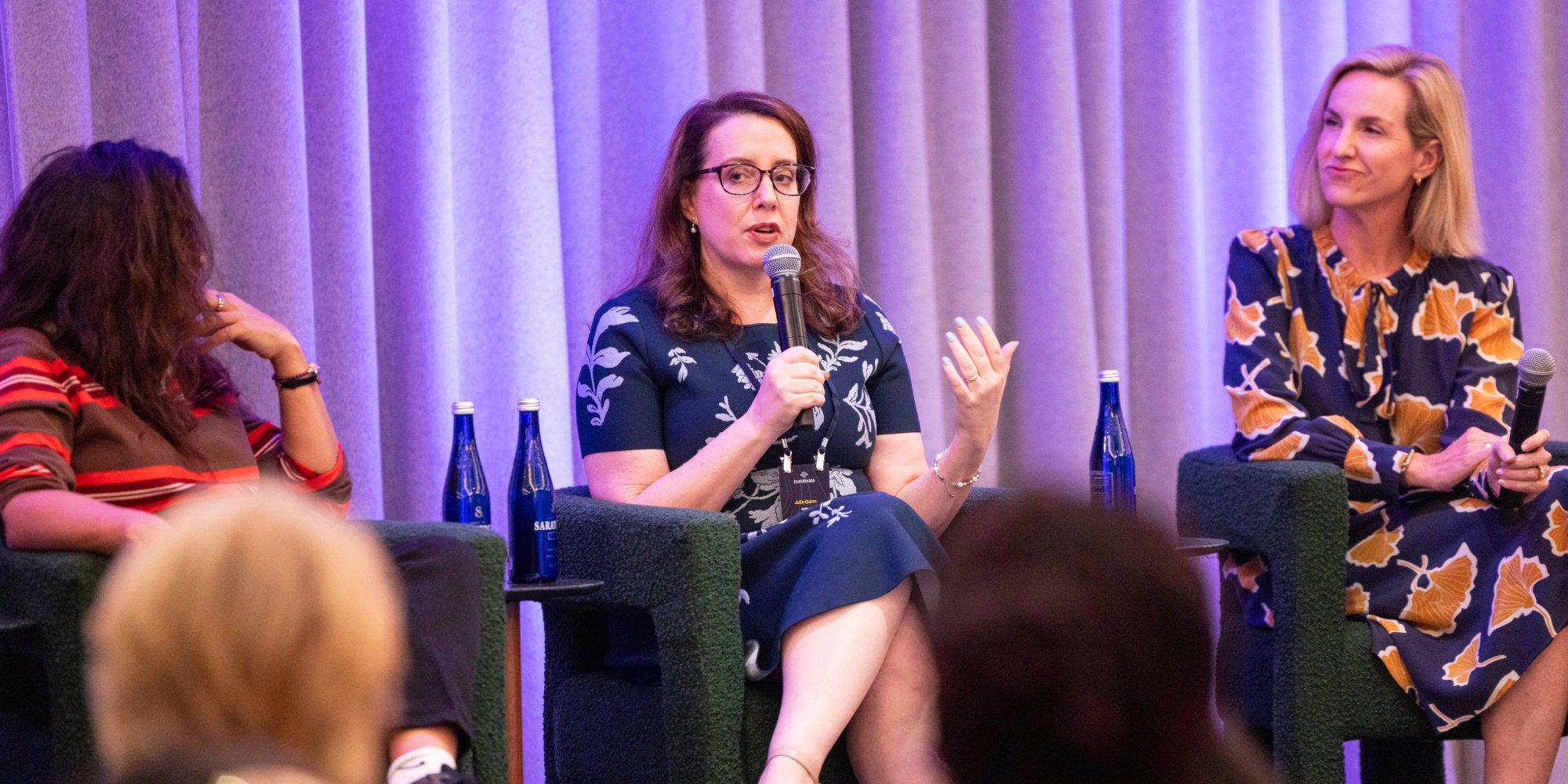
Julia Quinn, Author
For Moms First Founder Reshma Saujani, motherhood is the unfinished business of feminism, and storytelling is essential to building the movement for change. She describes Moms First as the “microphone of the movement,” using stories to turn widespread support into collective action. As she noted, even with overwhelming support for childcare across political lines, policy change remains elusive. “You can have popularity, but if you don't have intensity, you can't win,” she explained.
That same thinking shaped the release of her recent documentary, No Country for Mothers. Rather than a traditional release, community screenings are turning shared viewing experiences into opportunities for movement-building—making the film a starting point to build intensity for collective action, not the end of the story.
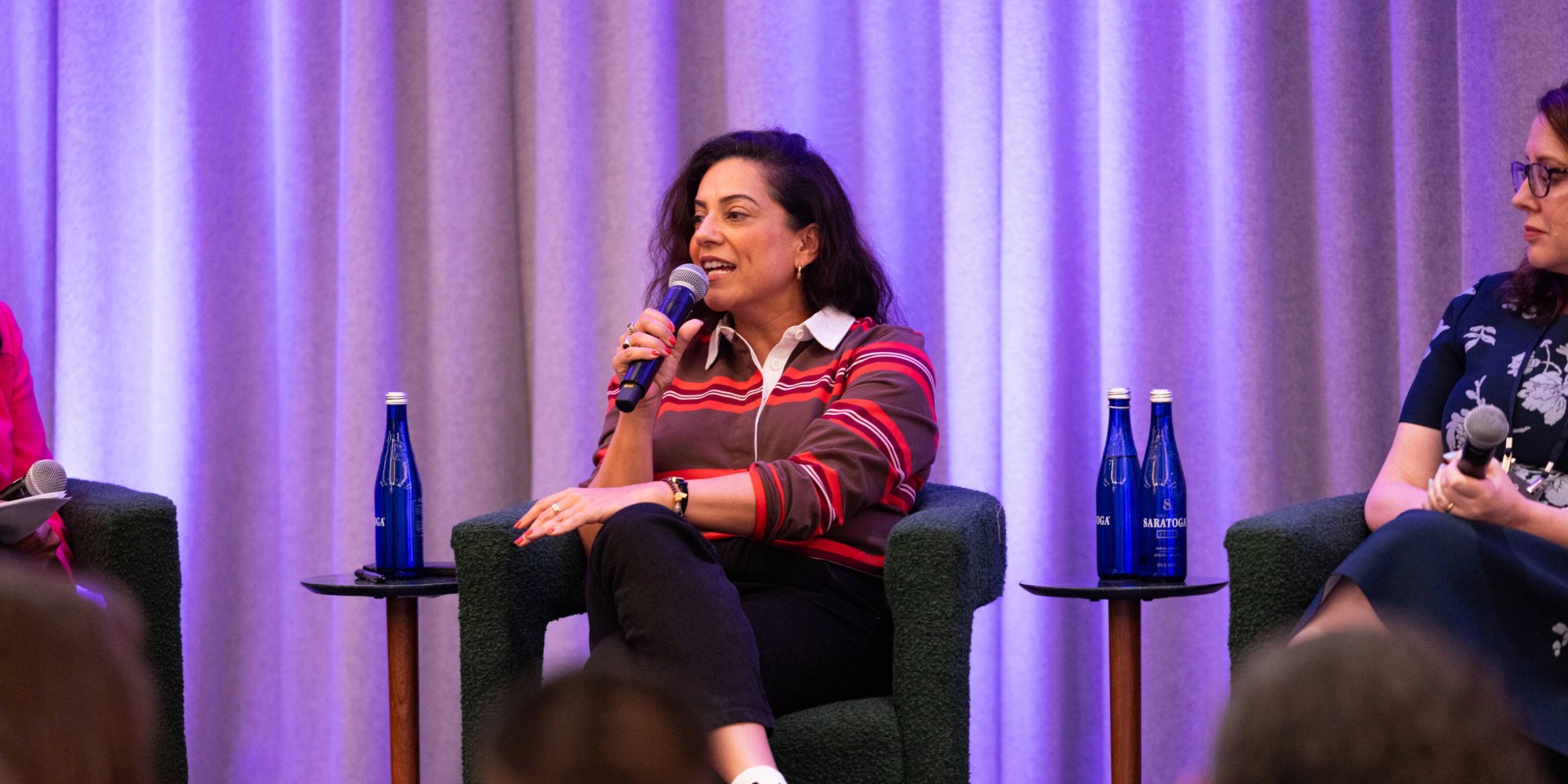
Reshma Saujani, CEO & Founder, Moms First
Emily Ramshaw, journalist, co-founder, and CEO of The 19th, launched the newsroom to elevate perspectives too often missing from political coverage. Asked how she decides whose experience becomes the doorway into a larger story, she explained, “You can take almost any story, think about the person whose lens it is framed in, and suddenly everything shifts on its axis.”
That philosophy shaped The 19th's coverage of the fallout from the Dobbs decision, telling the story through the experiences of incarcerated women seeking abortion care. By changing whose perspective led the narrative, the newsroom made a systemic issue deeply human—demonstrating how the right storyteller can shift understanding, challenge assumptions, and change hearts and minds.
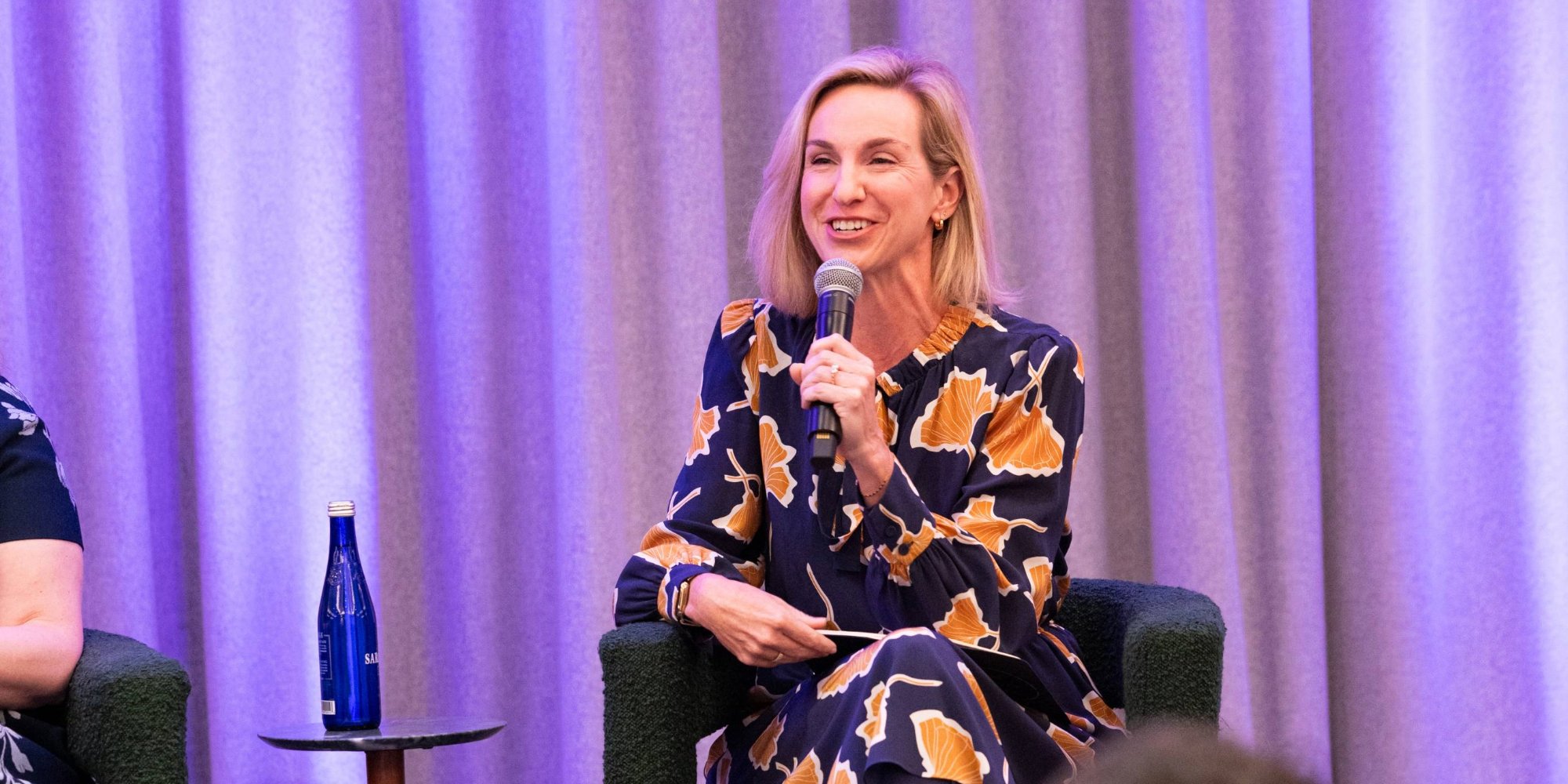
Emily Ramshaw, Co-Founder & CEO, The 19th
The panel closed with Hanstad asking each of the speakers to leave the room with one insight. All three answers pointed to the same place: look for the story that hasn't been told, the detail too ordinary to seem worth mentioning, the voice still left out.
Each panelist’s superpower is not only naming what is broken but using stories to help people imagine a world where change is possible.
Closing the afternoon, Panorama’s Melanie LeGrande captured the day into a single thought:
"Firmer ground isn't something we find. It's something we build together."
That is the premise the Leadership Forum is built on: not a conference that hands out answers, but a space intended to make the days of UNGA and Climate Week ahead feel more connected, and a little more possible, for everyone in it.
"None of us has the whole picture. But together, we can build something no individual could build alone."
See some of our favorite moments from the Leadership Forum
 Your Vision
 Our Platform
 Real impact

Panorama Global is a member of The Panorama Group.
Privacy Policy © 2026 Panorama Global. All rights reserved.
 Contact Us
 Search
 Join Our Mailing List